
AI Phone Assistant or Chatbot: Which Suits Your Business?
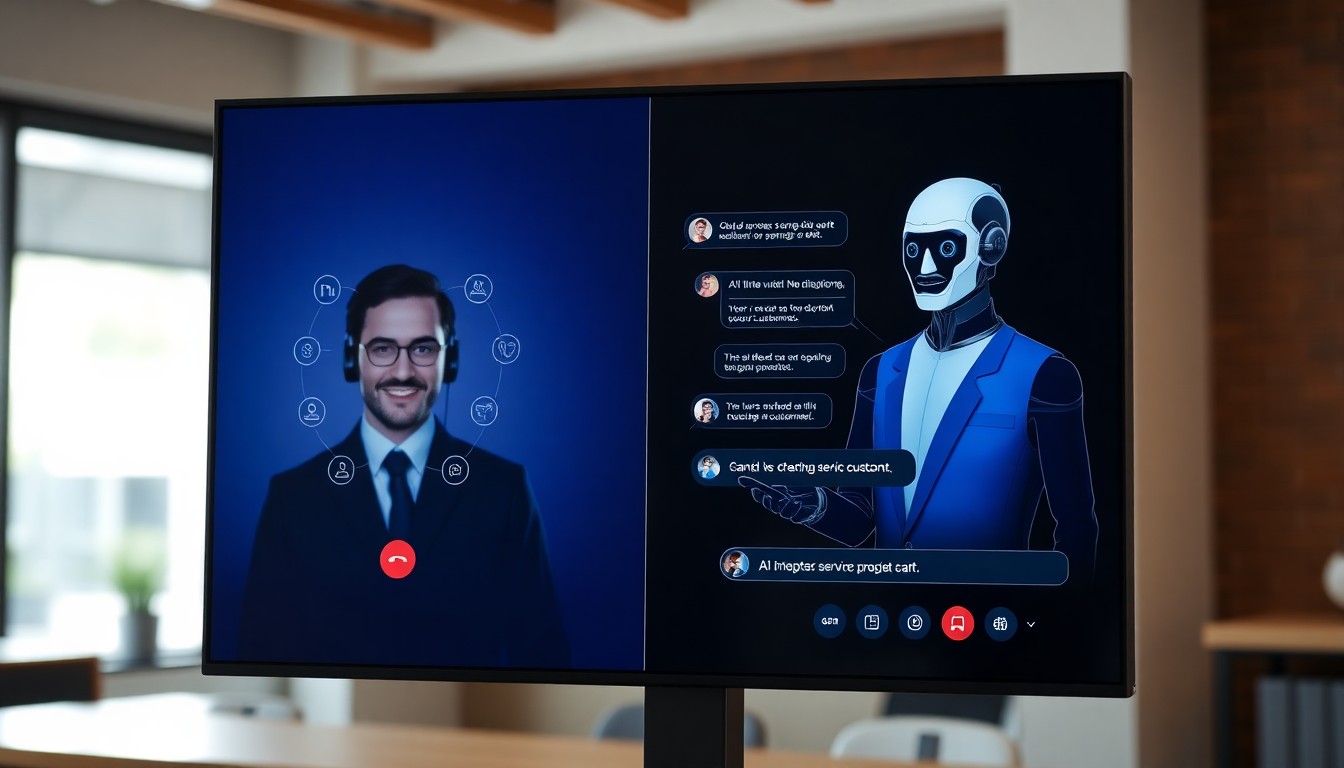
If you want to automate customer communication in sales, you will soon face a choice between an AI phone that holds conversations and a chatbot that writes. This AI phone vs. chatbot comparison shows how the two differ technically and in the customer experience, which situations each channel suits and which legal points need attention, especially with calls.
Two channels, two kinds of conversation
An AI phone, often called a voice agent, works in three steps: speech recognition turns what is said into text, a language model formulates the reply, and a synthetic voice speaks it. All of this has to happen in a fraction of a second, otherwise unnatural pauses appear. Background noise, bad connections, dialects and people talking over each other make the task demanding.
A chatbot is technically simpler. The customer writes, the system replies in writing, and a delay of a second or two bothers nobody. In return, chat asks something of the customer: they have to want to write and be able to, and they have to find the chat in the first place, whether on your website or in WhatsApp.
This leads to the most important difference in everyday use. The phone reaches people who call because they are in a hurry, because they prefer to talk or because they are on the move. Chat reaches people who sort out a question on the side, do research on the sofa in the evening or want written confirmation.
AI phone vs. chatbot side by side
| Criterion | AI phone | Chatbot |
|---|---|---|
| Hurdle for customers | Low, anyone can make a call | Medium, the customer has to write and find the chat |
| Typical strength | Urgent matters, booking appointments, customers on the move | Questions about products and prices, links, documents, images |
| Technical demands | Higher: speech recognition, response time, voice | Lower |
| Traceability | Transcript, if recorded and permitted | The conversation exists in writing |
| Weaknesses | Long lists, spelling out numbers and addresses | People who do not want to write, time-critical emergencies |
| Legal particularity | Strict rules under the UWG (German Act against Unfair Competition) for outbound calls | Consent required for outbound messages |
The page AI phone assistant describes what an AI phone assistant takes on in a business and how it is set up.
Which channel suits which business
If your customers call
A car repair shop, a plumbing business or a medical practice lives by the phone. Many customers call from the car or from a building site and would never open a website chat. Here a chatbot does little good as long as the phone keeps ringing unanswered. An AI phone that hands out appointments, takes call-back requests and answers standard questions starts exactly where enquiries are lost today. The article on AI voice assistants beyond IVR menus shows how this differs from classic phone menus.
If your customers do research
An online shop, a software provider or a training provider has visitors who compare product pages and have questions while doing so. Chat is ideal for them: the bot can link to the right page, send a size chart or attach a course overview. On the phone that would be cumbersome.
If both apply
An estate agent receives enquiries via property portals, WhatsApp and the phone. Some want a viewing quickly, others send questions about the listing in the evening. In cases like this it makes sense to offer both channels and connect them to the same calendar and CRM, so that no contact is handled twice or not at all. For the chat side, the guide to the WhatsApp AI chatbot is worth reading.
Outbound calls: the trickiest point legally
Many providers advertise that an AI phone can also call leads proactively. In Germany, caution is needed here. Under the UWG, marketing calls to consumers are only permitted with prior express consent. In B2B, presumed consent may be sufficient in some circumstances, but according to a widely held view, stricter standards apply to automated calls. Then there are the information obligations under the GDPR.
Less problematic are call-backs at the customer's explicit request, appointment reminders to customers who have booked an appointment, and follow-up questions on an enquiry the customer made themselves. Have every outbound scenario checked legally before launch. In any case, the person called should learn at the start that they are talking to an AI. The article The EU AI Act for SMEs summarises what the EU AI Act requires here.
What to look for when choosing
- Test German in everyday conditions. Have colleagues with different dialects call in, from the car and with background noise. Check how names, house numbers and phone numbers are recognised.
- Listen to the voice. A pleasant, calm voice matters more than one designed to sound particularly human. Customers are more forgiving of a recognisable AI than of one that pretends.
- Test the handover to people. What happens when the customer says or writes “I'd like to speak to a member of staff”? The response should be quick and reliable in every channel.
- Clarify the connection. Both channels should write to the same CRM and the same calendar.
- Clarify data protection. Where are conversations processed and stored, is there a data processing agreement, are calls recorded and, if so, with what consent?
When neither channel makes sense
If you only receive a few enquiries a week and answer them reliably yourself, automation quickly costs more than it brings. And with sales that need a lot of explanation and long negotiations, as in plant engineering, neither a phone AI nor a chatbot replaces the conversation with the sales engineer. There, AI can at most help with booking appointments or pre-qualification.
Caution is also needed with emotionally difficult matters. Anyone calling a law firm about a dismissal or an undertaker about a death expects a person. In such cases an assistant can at most bridge the gap in availability, take the call-back request and promise when someone will get in touch. That promise must then be kept.
How to find out which channel works for you
Before you start, decide what counts as success: a booked appointment, a qualified enquiry or an order. Measure it separately for each channel, that is, how many calls and how many chats reached that goal. After a few weeks you will see where the assistant achieves more. Add the second channel only once the first runs smoothly, and make sure both use the same calendar and the same customer data.
Frequently asked questions
Do customers notice they are on the phone with an AI?
Often, yes, and that is fine. You should say so openly at the start anyway. What matters is that the matter is dealt with quickly or lands cleanly with a person.
Is a chatbot cheaper than an AI phone?
That depends heavily on the provider and the pricing model. Some charge by the minute, others per conversation or at a flat rate. Compare costs based on your actual enquiry volume, not on list prices.
Where should I start?
With the channel through which most enquiries are lost today. For one week, count missed calls and unanswered messages. The result usually shows clearly where the first step lies.
Conclusion
In the AI phone vs. chatbot comparison there is no overall winner. The phone suits businesses whose customers call and need help quickly. Chat suits customers who do research and value written information. Many businesses do best with a combination, provided both channels are connected to the same systems. If you want to think further ahead, the article Chatbots vs. agents covers the next step.
Neurobots' AI employees work on the phone as well as in WhatsApp, SMS, email and website chat, and pass appointments and contacts to CRM systems such as HubSpot, Salesforce or Pipedrive. The Digital assistant for estate agents is an example of a business using both channels.
Neurobots for your industry
See how AI employees handle inquiries and appointments in your industry.
View all industry solutionsNote: This article is for general information only. It is not legal advice and was not written or reviewed by lawyers. For your specific situation, please consult a lawyer. All information is provided without guarantee.
Related Articles

In-House AI vs. SaaS: Which Is the Better Fit for Your Sales?
Your own AI servers or rented software? An honest comparison of in-house AI and SaaS in sales, covering costs, security and clear decision criteria.
AI Sales Tools 2026 Compared: Tool Categories and Selection Criteria
AI sales tools 2026 compared by category: what CRM AI, outreach, AI employees and forecasting tools do, and how to check them before you buy.

Pricing models for AI agents: per minute, subscription or per seat?
Per minute, subscription with a quota or per seat: how providers bill AI agents, when each model fits and how to make offers comparable.
AI Automation for Your Business
Let's find out together which of your processes can be automated with AI employees — free and without obligation.
Book a free consultationROI
Calculated before the start, measured continuously